Define the handling envelope
- Placement height and setback: note the elevation and how far back from the edge or wall the forks must be.
- Load profile: pallet dimensions, load center, and whether a fork-only or carriage choice changes clearance.
- Approach path: confirm turning widths at gates, between stockpiles, and around scaffold.
Terrain and surface support
Regional soils and evaporation can leave subgrades dry on top yet variable underneath. New concrete in large facilities may also be in different cure stages.
- For exterior laydown, confirm compaction on access lanes and staging pads.
- Around interior slabs, check whether material placement must be from exterior due to floor protection rules; this increases the needed reach and may influence machine size.
Wind and dust around elevated placement
When placing materials at height—roof edges, mezzanines, or platform levels—exposure to wind increases with elevation. Planning often includes:
- Whether placement can occur from a shielded side of the structure.
- If smaller lifts or /forklift-rental/ can shuttle loads to a hand-off point closer to the building to shorten boom extension.
- Site procedures and the selected unit’s instructions remain the basis for any elevated placement.
Coordinating with other equipment
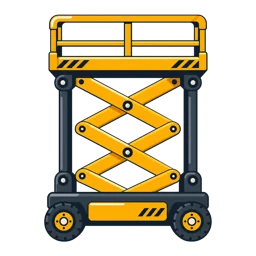
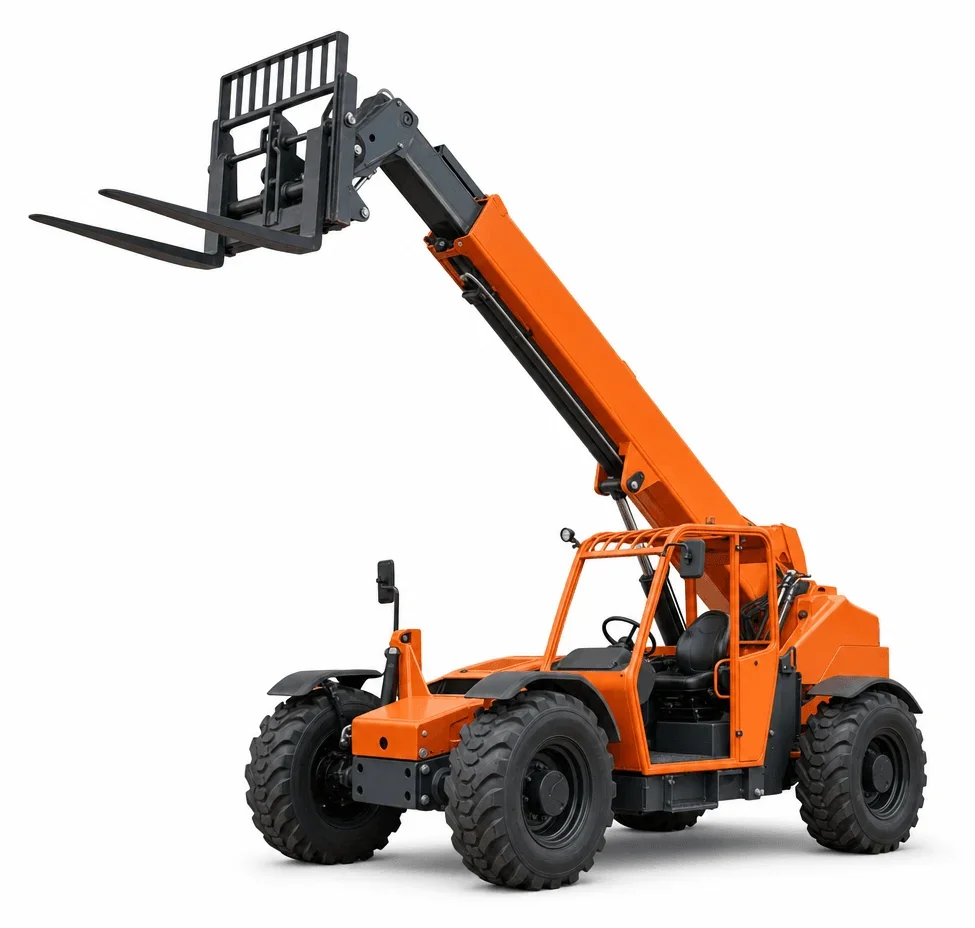
On active industrial sites and large campuses, telehandlers commonly work alongside scissor lifts and booms. A practical flow is to stage bulk materials with the telehandler, then use /rough-terrain-scissor-lift-rental/ or /articulating-boom-lift-rental/ for install at height. For night or early starts, /generators-light-towers-rental/ supports visibility.
Access, transport, and storage
Measure clearances at entries and verify where the unit can be stored when high winds or dust events pass through. Open yards may also benefit from /temporary-fencing-barricades-rental/ to keep drifted debris away from moving parts.