Terrain and approach
- Surface type: graded soil, gravel, or partially cured slab
- Access slopes at drive entries and loading aprons
- Distance between parking and work zones
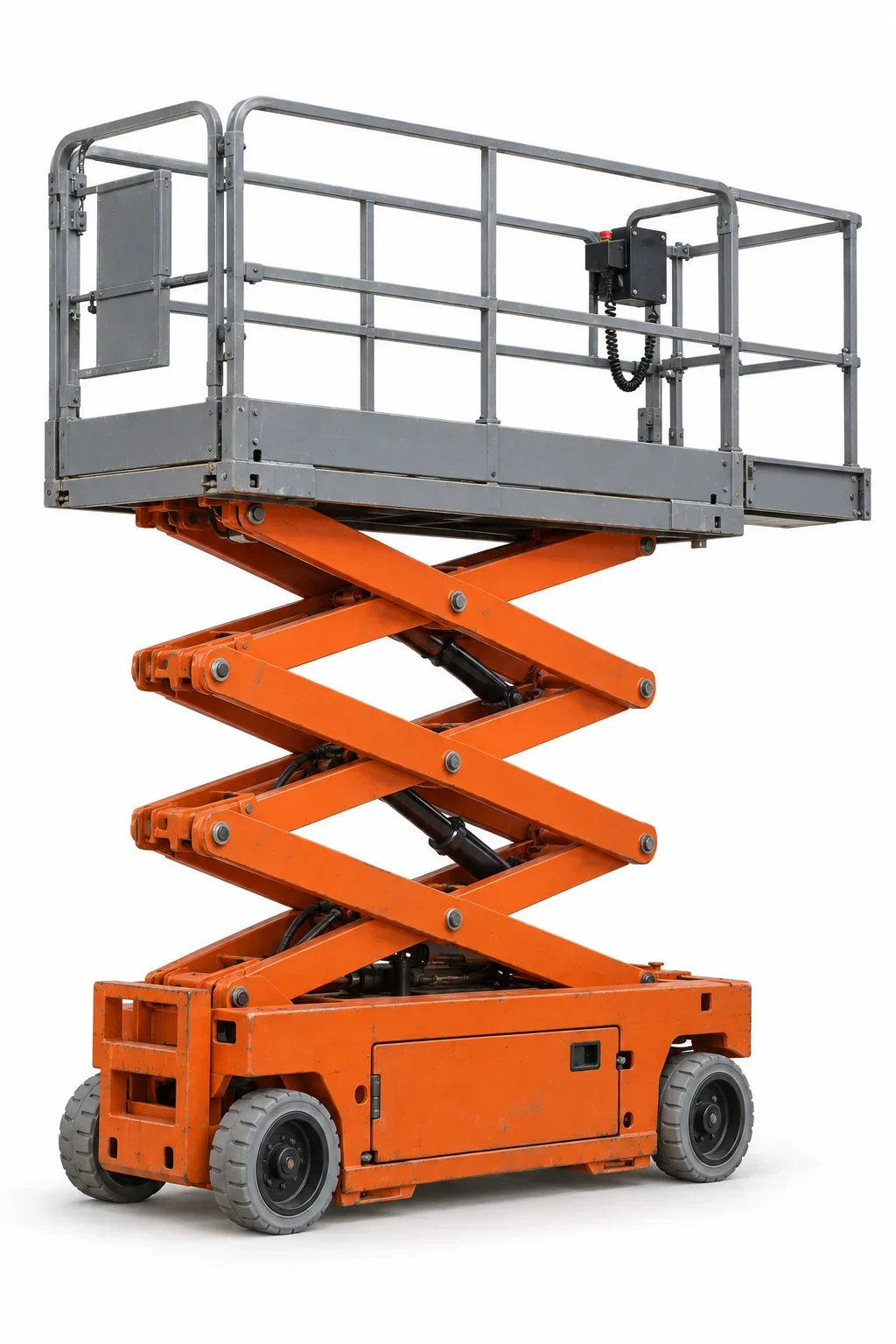
Four‑wheel drive, oscillation, and larger tires are common where surfaces rut or powder. Long approaches may favor units with higher travel speed and robust guarding against dust intrusion.
Wind and exposure planning
Open industrial sites around Lubbock experience frequent gusts. Rough‑terrain scissor lifts have specific use limits from their manufacturers. Actual site conditions, the selected unit’s instructions, and project procedures determine if exterior platform work proceeds on a given day.
Platform capacity vs. footprint
- Choose platform size for the number of people and materials needed at height.
- Balance width with gate and corridor constraints if moving indoors later.
- Verify ground bearing where the lift will sit, especially near utility cuts or newly placed slabs.
When a boom is the better tool
If the lift cannot park under the work—such as tasks over conveyors, awnings, or pipe racks—consider /boom-lift-rental/ for up‑and‑over reach. For mixed interior and exterior scopes, look at /aerial-lift-rental/ to compare machines by reach and weight.
Keep the comparison specific
A useful equipment discussion starts with the work height, the practical machine position, the route into the area, the floor or ground along that route, and the people, tools, or material involved. Those details clarify whether vertical access, outreach, or material placement is the real constraint.