Job geometry comes first
- Can the platform sit directly under the work area?
- Is lateral reach needed over equipment, dock canopies, or shelving?
- How much clearance exists at doors, corridors, and service elevators?
Straight vertical work on a flat slab favors slab or compact electric scissors. If the platform must reach out over obstacles, compare scissor lifts to booms on the /aerial-lift-rental/ page.
How Lubbock conditions affect the pick
The regional climate brings frequent gusty periods and dust. Outdoor scissor work often pauses or shifts to sheltered windows, and ground conditions at industrial sites can be dry, rutted, and powdery. Indoors, sensitive environments push for low‑emissions, non‑marking tires, and tight turning to navigate long corridors and mechanical rooms.
Narrowing the scissor category
- Working height: measure the task height and translate to platform height plus margin. If ductwork or lighting sits directly above the machine, a slab scissor is typical.
- Floor rating and slab edge distances: wide‑bay buildings may have joints and curing variations; confirm floor load for the machine’s weight.
- Access points: door clear width and height, slope of ramps, and trailer or dock constraints.
- Terrain: for yards, infill projects, or utility runs between buildings, look at /rough-terrain-scissor-lift-rental/.
When a boom lift fits better
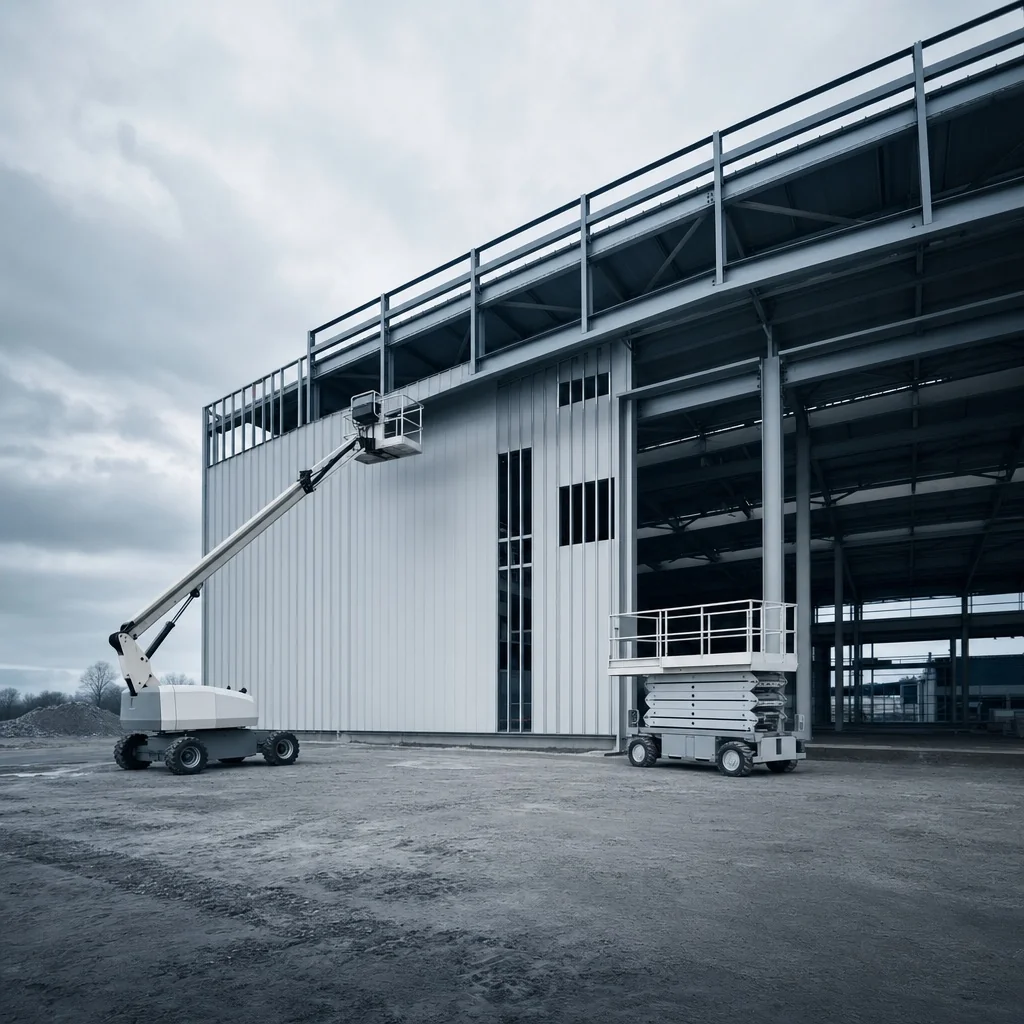
If the machine cannot sit beneath the task—such as work over conveyors, trucks, or pipe racks—boom lifts provide up‑and‑over access. Compare options on /boom-lift-rental/.
Related lift categories
- Indoor vertical access: /electric-scissor-lift-rental/
- Yard and shell‑stage projects: /rough-terrain-scissor-lift-rental/
- Mixed fleets for exterior envelopes: /aerial-lift-rental/
Keep the comparison specific
A useful equipment discussion starts with the work height, the practical machine position, the route into the area, the floor or ground along that route, and the people, tools, or material involved. Those details clarify whether vertical access, outreach, or material placement is the real constraint.